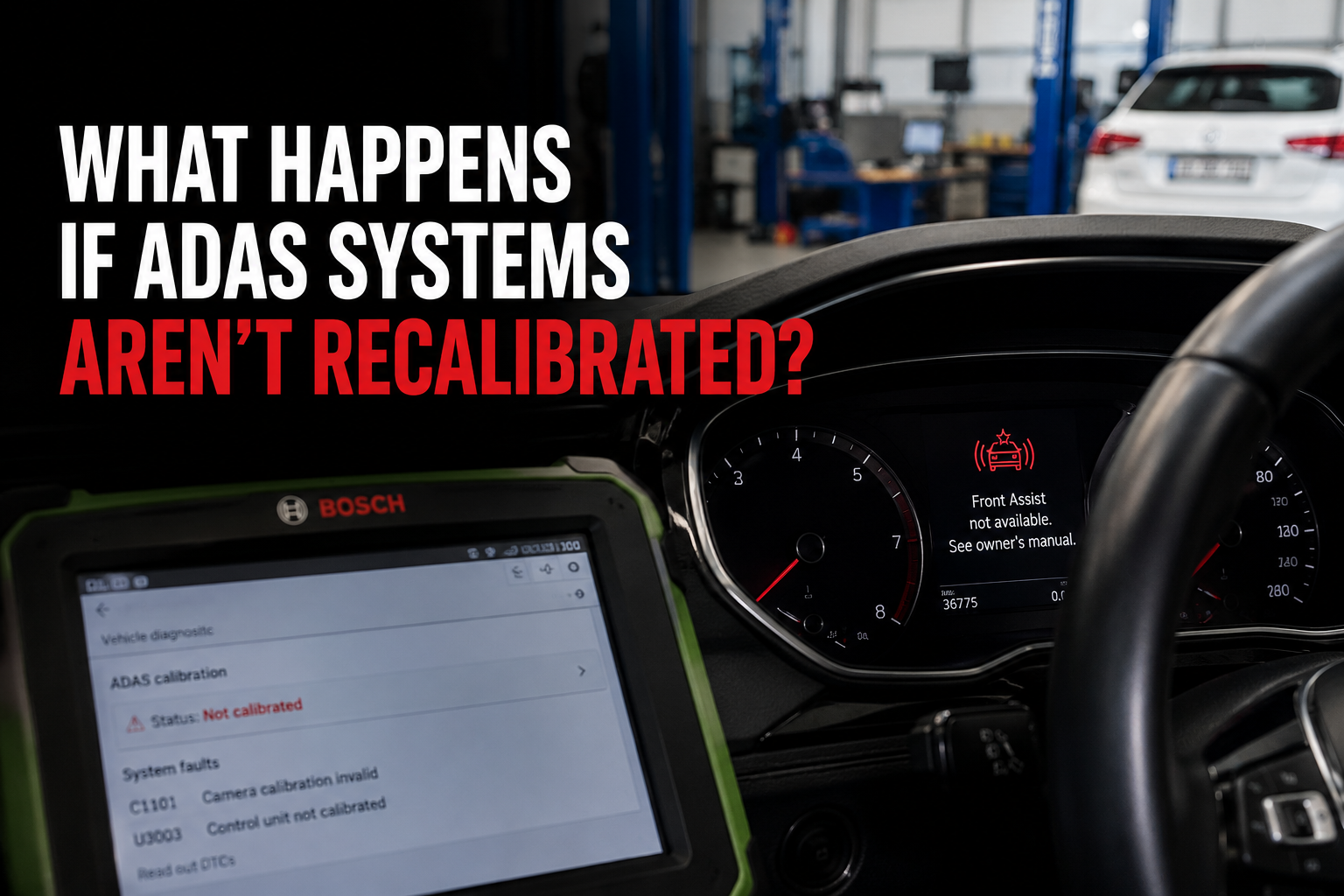
What Happens If ADAS Systems Aren’t Recalibrated?
Introduction
Advanced Driver Assistance Systems are designed to improve vehicle safety and reduce collision risks on the road. However, these systems rely on precise calibration to operate correctly.
When cameras or radar sensors become misaligned after repairs or component replacement, vehicle safety systems may no longer perform as intended.
Why Calibration Accuracy Matters
ADAS systems calculate:
- Vehicle positioning
- Lane positioning
- Distance measurements
- Object recognition
- Speed and braking calculations
Even slight alignment issues can affect how these systems interpret the road environment.
Common Problems Caused By Incorrect Calibration
Incorrect or missing ADAS calibration may result in:
- Lane assist operating incorrectly
- Autonomous emergency braking failing to respond accurately
- False collision warnings
- Blind spot monitor errors
- Adaptive cruise control issues
- Dashboard warning lights
- Camera or radar communication faults
Safety Risks
Improperly calibrated systems can reduce the effectiveness of:
- Collision avoidance systems
- Driver assistance features
- Emergency braking systems
- Lane keeping systems
- Vehicle safety technology
When Recalibration Is Commonly Required
Calibration is commonly required after:
- Windscreen replacement
- Accident repairs
- Front bumper repairs
- Suspension repairs
- Wheel alignments
- Camera replacement
- Radar replacement
Professional ADAS Calibration Melbourne
National ADAS Calibrations provides professional ADAS calibration services across Melbourne using advanced OEM-level equipment and manufacturer-compatible procedures for passenger, commercial and heavy vehicles.