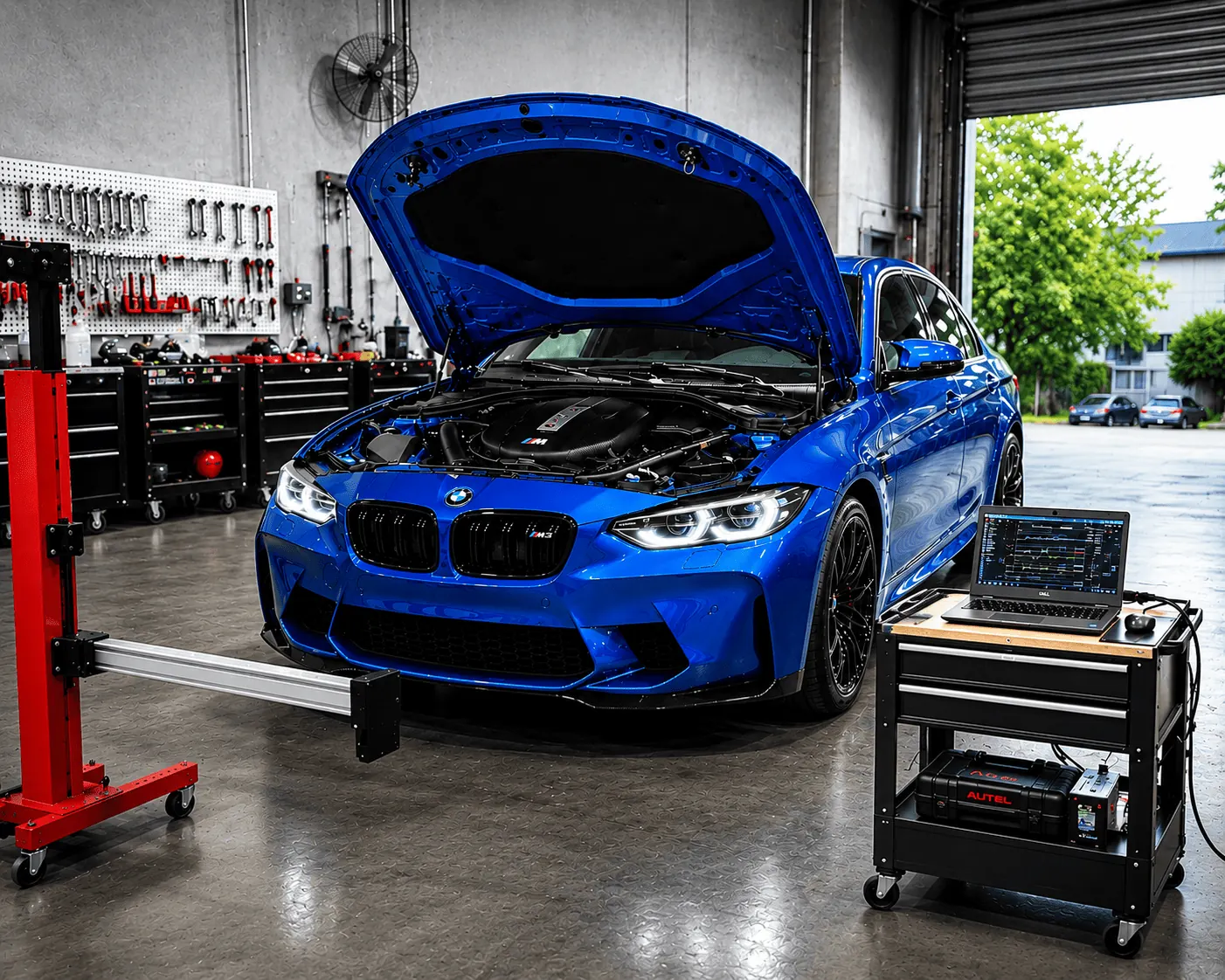
What Is ADAS?
Your complete guide to Advanced Driver Assistance Systems — what they are, how they work, and why regular calibration is essential for your safety.
What Is ADAS?
Advanced Driver Assistance Systems (ADAS) are a collection of electronic technologies designed to improve vehicle safety and enhance the driving experience. These systems use a combination of cameras, radar, LiDAR, and ultrasonic sensors to monitor the vehicle's environment and either warn the driver of potential hazards or automatically intervene to prevent accidents.
ADAS technology is now standard equipment in most new vehicles sold in Australia and is widely present in vehicles from the past 10 years. From basic lane departure warnings to fully autonomous emergency braking, these systems are a critical component of modern vehicle safety.
Common ADAS Systems
Automatic Emergency Braking (AEB)
Applies brakes automatically to prevent or reduce collisions.
Forward Collision Warning (FCW)
Warns the driver of an impending forward collision.
Lane Keep Assist (LKA)
Gently steers the vehicle back into its lane if it drifts.
Adaptive Cruise Control (ACC)
Maintains a safe following distance automatically.
Blind Spot Monitoring (BSM)
Detects vehicles in the driver's blind spot.
Rear Cross-Traffic Alert
Warns of approaching vehicles when reversing.
How ADAS Works
ADAS systems rely on sensors — primarily cameras, radar, and ultrasonic sensors — to perceive the vehicle's surroundings. These sensors feed data into an Electronic Control Unit (ECU), which processes the information and determines whether a warning or intervention is required.
The accuracy of these systems depends entirely on the sensors being precisely aimed and calibrated to the manufacturer's specifications. Even a small misalignment — caused by a windscreen replacement, suspension repair, or minor accident — can cause the system to operate incorrectly, potentially providing false warnings or failing to detect genuine hazards.
When Is Calibration Required?
Windscreen Replacement
Forward-facing cameras are typically mounted on the windscreen and must be recalibrated when replaced.
Wheel Alignment or Suspension
Changes to the vehicle's geometry directly affect sensor alignment.
Body Repairs
Bumper removal or repairs can disturb radar and parking sensor mounting points.
Module Replacement
Installing new ADAS control modules requires full programming and calibration.
Why Calibration Matters for Safety
“An uncalibrated or poorly calibrated ADAS system can be more dangerous than no system at all. If a forward collision camera is misaligned, the vehicle may fail to detect an obstacle directly in its path.”
Protecting you, your passengers, and other road users.
Get in Touch
Your safety is our priority. Our ADAS calibration experts are ready to assist you with prompt precise services.
Loading map...
Phone
03 9969 3604
Address
4/159 Newlands Road Coburg North, VIC 3058, Australia.
info@adascalibrations.au